About 50 Hz Infrared Ray Sample Dyeing Machine
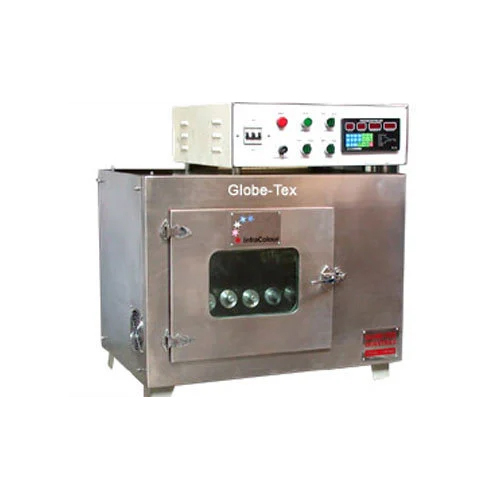
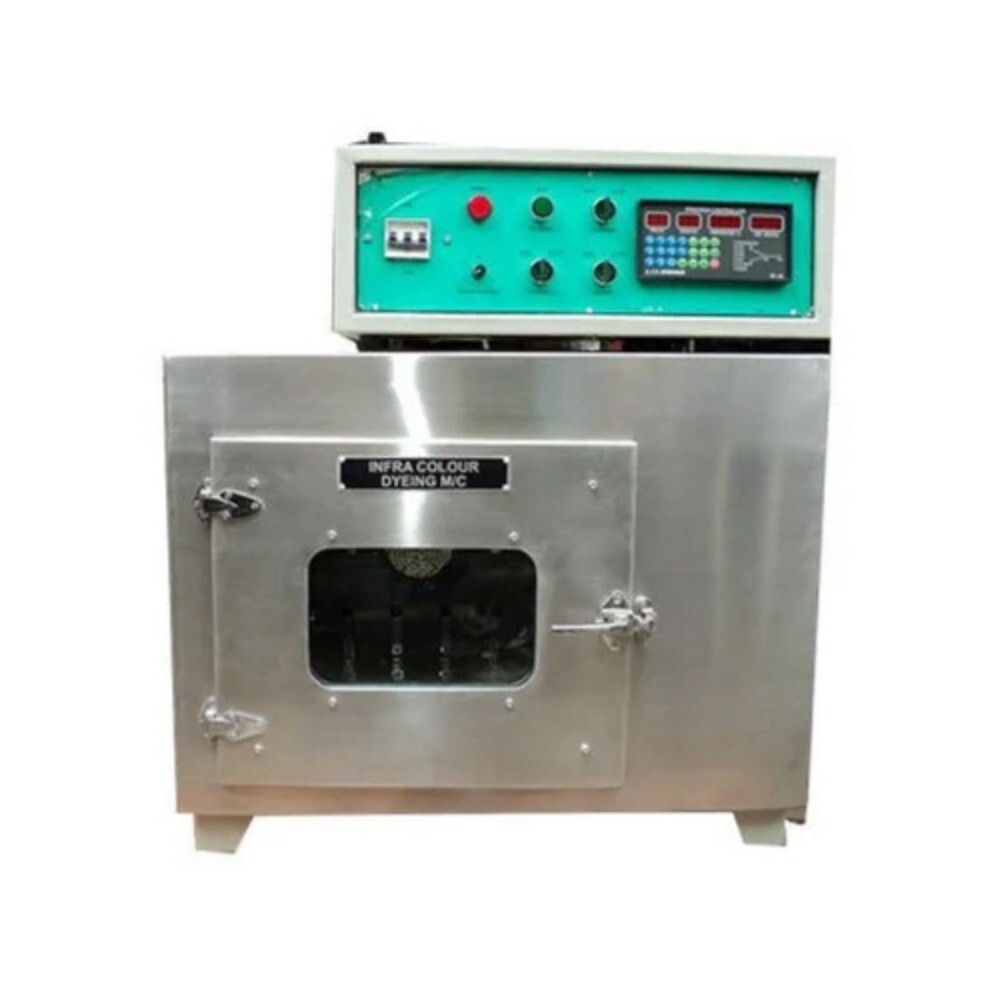
We are actively engrossed in dealing a broad array of 50 Hz Infrared Ray Sample Dyeing Machine. It is able to perform dyeing operations at a range between environment heat and 140 C. This machine is common used in the laboratory. 50 Hz Infrared Ray Sample Dyeing Machine is suitable for dispersive dyes. The dyeing machine is for the identification of substances present in textile products. It facilitates dyeing of all types of fabric and yarn samples with all classes of dyes. The dyeing machine is easy to placed and maintained.
Advanced Infrared Heating TechnologyThis dyeing machine uses state-of-the-art infrared ray heating, delivering fast, uniform, and energy-efficient temperature control that promotes even dye penetration. The programmable timer and microprocessor-based controls enable precise adjustments for different fabric types and dyestuff, ensuring reliability and reproducibility in every batch.
Safety and User ConvenienceOperator safety is ensured through automatic air cooling, thermal cut-off, and overheat protection. An intuitive digital LCD display simplifies parameter setting, while durable stainless steel sample holders and heavy-duty caster wheels guarantee both robust construction and easy mobility. The compact design supports seamless laboratory integration.
Versatility for Laboratory ApplicationsWith compatibility for reactive, disperse, acid, direct, vat, and sulfur dyes, this machine caters to a diverse range of laboratory and R&D needs. It is suitable for a variety of fabrics up to 200 mm wide, and beaker capacity options enable high-throughput sample processing, supporting rapid textile innovation and shade development.
FAQ's of 50 Hz Infrared Ray Sample Dyeing Machine:
Q: How does the infrared ray heating method benefit the dyeing process?
A: The infrared ray heating system ensures rapid and uniform heating of samples, minimizing temperature fluctuations across beakers. This not only delivers consistent and reproducible dye results but also enhances energy efficiency by reducing heat loss compared to conventional heating methods.
Q: What types of dyes and fabrics are compatible with this machine?
A: This sample dyeing machine accommodates a wide range of dyes, including reactive, disperse, acid, direct, vat, and sulfur types. It is suitable for woven, knit, and synthetic fabrics with sample widths up to 200 mm, enabling flexible R&D and product development applications.
Q: When should the programmable start/stop timer be used in the dyeing process?
A: The programmable timer allows users to set precise start and stop times for each dyeing cycle. This function is especially useful for processes that require exact duration control, helping to avoid over- or under-processing and ensuring optimal dye fixation.
Q: Where is this machine most effectively used?
A: This laboratory dyeing machine is designed for use in textile labs, R&D facilities, and manufacturing environments focused on shade matching, sample development, and small-batch dye trials. Its compact design and mobility make it suitable for various workspaces.
Q: What safety features are incorporated in the machine design?
A: Operator and equipment safety are prioritized with thermal cut-off and overheat protection mechanisms, along with automatic air cooling. These features prevent overheating and ensure safe operation during and after dyeing cycles.
Q: How can users benefit from the digital LCD and microprocessor controls?
A: The digital LCD display, coupled with microprocessor-based control, allows users to program, monitor, and adjust temperature, time, and speed settings with 1C accuracy. This guarantees reproducibility, minimizes manual errors, and streamlines process management for precise laboratory dyeing tasks.
Q: What makes the sample holders and beakers durable for laboratory use?
A: Sample holders are crafted from stainless steel and beakers are made from high-temperature resistant glass or stainless steel, allowing them to withstand the rigorous thermal cycling of laboratory dyeing while maintaining chemical integrity and longevity.


 Send Inquiry





 Send Inquiry
 Send Inquiry
 Send SMS

