About Synthetic Blood Penetration Resistance Tester
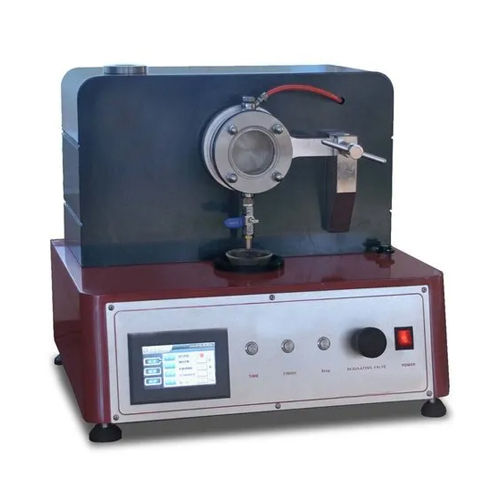
Owing to rich industrial experience, we are providing a broad series of Synthetic Blood Penetration Resistance Tester. It is used to evaluate the barrier performance of fabrics used as surgical gowns. Therefore, provided tester is for measuring the resistance of medical face masks to penetration by a splash of synthetic blood. Synthetic Blood Penetration Resistance Tester is well suited Industrial, laboratory and leather industries. It is made with mild steel powder coated material to increase its durability. It is designed to meet the need for reliable and consistent testing of concrete samples.
Advanced Microprocessor ControlEngineered with a cutting-edge microprocessor and a user-friendly touchscreen interface, this tester enables precise programming and intuitive operation. The digital LCD/TFT display guides users through settings, test progress, and data review, minimizing errors and enhancing user confidence. Each test parameter is easily customizable to match varied specimen needs and compliance requirements.
Robust Testing for Industry StandardsThe tester fulfills global standards, including ISO 16603, ASTM F1670, and EN 13795, ensuring reliable results. It accommodates a typical specimen size of 75 mm x 75 mm. The robust construction from mild steel, stainless steel, and powder-coated steel provides durability and consistent performance under various temperature and humidity conditions, essential for industrial laboratories and manufacturers.
Safety and Data Management FeaturesOperator safety is ensured with a protective shield and emergency stop mechanism. Visual and audible alarms indicate test completion or any abnormalities. The data output system allows seamless integration with computers via USB or RS232 interfaces for effortless data logging and analysis. Anti-slip feet secure the device during operation, supporting safe and consistent use in demanding environments.
FAQ's of Synthetic Blood Penetration Resistance Tester:
Q: How does the Synthetic Blood Penetration Resistance Tester operate?
A: This device operates through a microprocessor-controlled touchscreen, allowing users to set test parameters such as test duration, pressure, and fluid volume. A precision reservoir dispenses synthetic blood onto medical fabric specimens, while the system monitors penetration resistance, displaying all data digitally and providing a post-test alarm.
Q: What materials can be tested with this instrument?
A: The tester is designed for nonwoven fabrics and medical textile materials, including medical protective clothing, surgical gowns, and face masks. It is especially useful for quality assurance and R&D in industrial and laboratory settings, ensuring products meet stringent protection standards.
Q: When should the instrument be recalibrated or maintained?
A: Regular maintenance and recalibration are recommended depending on usage frequency-typically every six months or as advised in the operation manual. Routine checks ensure accurate readings and compliance with ISO 16603, ASTM F1670, and EN 13795 standards.
Q: Where is the device best installed for optimal performance?
A: Install the tester on a stable, level surface in a laboratory or controlled industrial environment, within a temperature range of 15C to 40C and humidity of 30%-85% RH. Anti-slip feet provide extra stability, and the compact bench-top design saves space in busy labs.
Q: What is the process for testing specimens with this machine?
A: Place a medical textile specimen (typically 75 mm x 75 mm) in the tester's holder and connect the synthetic blood via the standard syringe port. Program the desired test parameters using the touchscreen. The instrument automatically runs the test, controls fluid injection, and alerts when complete.
Q: How does the instrument ensure operator safety during testing?
A: Safety is prioritized with a protective shield guarding against accidental fluid contact and an emergency stop button that immediately halts testing. Visual and audible alarms alert users to test completion or abnormal conditions, ensuring prompt response and secure operation.
Q: What are the benefits of using this tester for exporters, manufacturers, and suppliers in India?
A: Manufacturers and suppliers benefit from enhanced quality assurance, rapid digital data management, and international compliance. The tester streamlines certification processes for export and domestic use, ultimately supporting credibility, efficiency, and market competitiveness.


 Send Inquiry





 Send Inquiry
 Send Inquiry
 Send SMS

